
Online ESG and Sustainable Financial Strategy Course

Oxford Saïd Business School
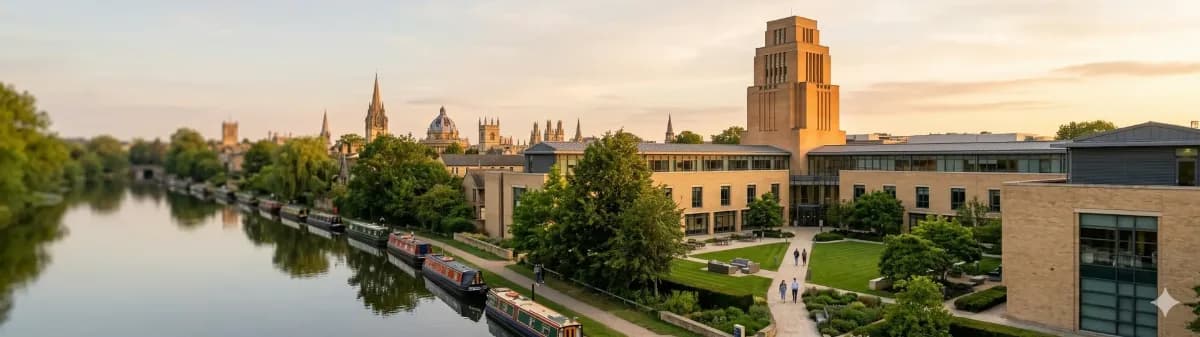
Saïd Business School at the University of Oxford was established in 1996, following a £20 million founding gift from Wafic Saïd, and holds the distinction of being Oxford's first business school despite the university's nine-century history. Located in the heart of Oxford, England, it is a department of one of the world's oldest and most research-intensive public universities. The school's founding mission was explicitly linked to preparing leaders capable of making a positive difference to business and society — a phrase that sounds routine until you see how thoroughly it shapes hiring decisions, research priorities, and program design. Today, that philosophy manifests in a curriculum that integrates economics, politics, psychology, and ethics into management education rather than treating them as electives bolted onto a finance core. Accreditations and Rankings Accreditations: AACSB accredited EQUIS accredited AMBA accredited Triple Crown — held by fewer than 1% of business schools globally Rankings: Financial Times Executive Education Open Programs: ranked 10th globally (2023) Financial Times Executive Education Custom Programs: ranked in the global top 15 (2023) Financial Times MBA: ranked 26th globally (2024) QS Global MBA Rankings: ranked 17th globally (2024) Executive Education at a Glance Saïd Business School's executive education portfolio is one of the most substantive in Europe, drawing roughly 8,000 participants annually across open enrollment and custom programs. The school is particularly well regarded for programs at the intersection of leadership, strategy, and systems-level thinking — areas where Oxford's broader academic depth gives faculty an unusually wide bench to draw from. Open programs span topics including finance for non-financial executives, negotiation, entrepreneurship, and board-level leadership, with durations ranging from two-day intensive formats to week-long residential programs and extended online offerings delivered through the Oxford Saïd Online platform. The flagship Oxford Advanced Management and Leadership Programme — a nine-day residential — is among the most subscribed open programs, regularly attracting participants from C-suite and senior VP levels. Custom programs are developed in partnership with corporate clients and have included work with organisations such as the NHS, Rolls-Royce, and several sovereign wealth funds. Open program fees typically range from £2,500 to £12,000 depending on length and format, and partial scholarships are available for participants from certain emerging markets through the Oxford Saïd Scholarship Fund. Campus and Facilities The Saïd Business School building, designed by architect Sir Jeremy Dixon and completed in 2001, sits immediately adjacent to the Oxford railway station and a short walk from the historic city centre — a deliberate choice that physically connects the school to the broader city rather than isolating it on a campus quadrangle. Inside, the building centres on a large circular lecture theatre that can seat several hundred participants, complemented by syndicate rooms, a dedicated executive education suite, and the recently expanded Thatcher Business Education Centre. Beyond the building itself, executive participants have access to Oxford's extraordinary wider infrastructure: the Bodleian Libraries, the Oxford Union, and colleges that date to the thirteenth century. The city of Oxford adds a dimension that is genuinely difficult to manufacture elsewhere — informal dinners in medieval halls, conversations that spill into college gardens, and a persistent sense that ideas taken seriously here tend to travel. Faculty and Research Saïd employs approximately 170 academic faculty, with significant representation from North America, continental Europe, and Asia alongside a British core — a breadth that matters when executive cohorts are themselves internationally drawn. Research strengths that feed directly into executive programs include entrepreneurship and innovation (the school hosts the Oxford Entrepreneurship Centre), finance and regulation, behavioural science, and responsible business. The Oxford Future of Finance and Technology Initiative and the Oxford Net Zero programme are two research centres whose outputs directly inform program content in ways that feel current rather than textbook-derived. Faculty who teach in executive programs are typically active researchers, and the school has an explicit expectation that teaching on practitioner programs should reflect live research rather than settled wisdom. Student Body, Alumni, and Career Outcomes Saïd's executive education cohorts are consistently among the most internationally diverse in Europe, with participants typically drawn from over 50 nationalities in any given year and a significant proportion holding titles at director level or above. The broader Oxford alumni network — spanning all faculties of the university — numbers over 320,000 across more than 190 countries, giving Saïd executive participants an associational reach that extends well beyond a single school's graduate list. Alumni are concentrated in financial services, technology, energy, government, and international development, reflecting the school's stated focus on sectors where the relationship between business decisions and public outcomes is most direct. While Saïd does not publish executive education placement statistics in the way an MBA programme would, alumni surveys consistently cite peer network quality as the primary reported benefit — and the school's annual reunion events in Oxford and major international cities are unusually well-attended for a program of its age.
Interested in this program?
No upcoming dates are listed right now. Register your interest and Oxford Saïd Business School will let you know when the next cohort opens.
Duration
7 weeks
Format
online
Topic
Sustainability & ESG
Language
English
Executive Summary
About This Program
Why Oxford Saïd Business School?
Benefits
- Accounting = 7.5
- Management Services = 7
- Finance = 6.5
- Economics = 3.5
- Personal Development = 2
Frequently Asked Questions
How to Apply
- 1
Check your eligibility
Review the entry requirements listed on this page. Most executive programs require 8–15 years of professional experience.
- 2
Compare programs
Use Gradia's comparison tool to evaluate up to 3 programs side-by-side on fees, duration, format, and accreditation.
Compare programs → - 3
Contact the school
Send a message directly to Oxford Saïd Business School via Gradia to request a brochure or speak with an admissions advisor.
- 4
Prepare your application
Gather your CV, reference letters, and any required test scores. Many EMBA programs waive standardised tests for senior candidates.
- 5
Submit your application
Apply directly through Oxford Saïd Business School's official application portal.
Apply now →
Other Sustainability & ESG programs at Oxford Saïd Business School
1 / 44 programs available