

Stanford Graduate School of Business
Why Stanford GSB?
About Stanford Graduate School of Business
The Stanford Graduate School of Business, founded in 1925, is a graduate professional school of Stanford University, a private research university located in Stanford, California — on the San Francisco Peninsula, roughly 35 miles south of the city. Established with a founding gift from Senator Leland Stanford and his wife, the school was built on the conviction that business could be a force for social good as well as commercial success — a tension it has never stopped exploring. Today, GSB's academic philosophy is captured in its motto, Change Lives. Change Organizations. Change the World, which sounds aspirational until you look at the alumni list and realise it was written retrospectively as much as prospectively. Research at GSB spans organisational behaviour, political economics, finance, and strategy, with a persistent emphasis on how individual decisions aggregate into institutional outcomes.
Accreditations and Rankings
Accreditations
- AACSB accredited
- EQUIS accredited (Triple Crown status not held — AMBA accreditation is not pursued by GSB, consistent with its US peer schools)
Rankings
- Financial Times Global MBA Ranking: #1 (2023)
- QS World University Rankings – Business & Management: #2 globally (2024)
- Bloomberg Businessweek MBA Ranking: Top 5 (2023)
- US News & World Report Best Business Schools: #1 (2024)
Executive Education at a Glance
Stanford GSB Executive Education is built around two pillars: open-enrollment programs for individuals, and custom programs designed exclusively for organisations. The school is particularly known for its flagship Stanford Executive Program (SEP), a six-week immersive experience that has been running for over seven decades and draws C-suite participants from more than 35 countries. Other signature open programs include Leading Change and Organisational Renewal (LCOR), Executive Program for Growing Companies (EPGC), and Emerging CFO, each reflecting the school's preference for cohort-based, discussion-heavy learning rather than lecture-led instruction. Program durations in the open portfolio range from three days to six weeks, with most delivered on campus in Stanford, California, though select programs include online and blended formats. Fees for open programs typically range from approximately $7,000 for shorter seminars to over $65,000 for the full SEP experience. Custom programs for corporate clients vary substantially in scope and pricing.
Campus and Facilities
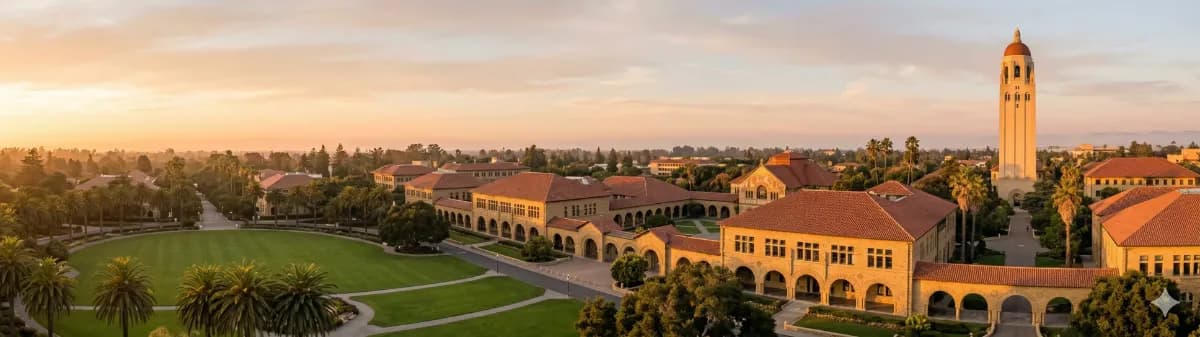
Stanford GSB occupies the Knight Management Center, a striking complex opened in 2011 and designed by Robert A.M. Stern Architects, featuring sandstone and red-tile architecture that harmonises with the wider Stanford campus without feeling dated. Executive participants have access to dedicated seminar rooms, tiered case study classrooms, and collaboration spaces designed explicitly for peer-to-peer exchange rather than passive learning. The surrounding Stanford campus — itself one of the most architecturally cohesive university environments in the United States — adds a sense of intellectual scale, with proximity to the Stanford d.school (Hasso Plattner Institute of Design) and Stanford Engineering creating cross-disciplinary collision that few business schools can replicate. And then there is the location itself: Palo Alto and the broader Bay Area give executive participants immediate, living access to the companies, investors, and entrepreneurs who define the current global economy.
Faculty and Research
Stanford GSB has a faculty of approximately 140 tenure-line professors, drawn internationally but disproportionately influential given the school's size — a number of them rank among the most-cited scholars in their disciplines worldwide. Research strengths particularly relevant to executive participants include organisational behaviour and culture change, behavioural economics, corporate governance, entrepreneurial finance, and the economics of innovation. Faculty routinely bring active consulting relationships, board positions, and startup involvements into the classroom, which keeps the instruction grounded in current practice rather than archived case studies. The school is home to several significant research centres, including the Stanford Institute for Innovation in Developing Economies (SEED) and the Corporate Governance Research Initiative (CGRI), both of which feed directly into executive program curricula.
Student Body, Alumni, and Career Outcomes
Executive education cohorts at Stanford GSB are deliberately kept small — the school values depth of exchange over scale — with most open programs running between 30 and 90 participants, and international representation typically exceeding 50% of any cohort. The broader GSB alumni network spans more than 42,000 graduates across 100+ countries, with particularly high concentrations in technology, venture capital, private equity, consulting, and government. Alumni include a remarkable density of founder-CEOs and investors: Phil Knight (Nike), Reid Hoffman (LinkedIn), and Mary Barra (General Motors) are among the names most frequently cited, but the more striking statistic is the volume of venture-backed companies tracing a direct line to GSB graduates. For executive participants, the alumni network functions less as a job-placement mechanism and more as a durable peer community — the kind that generates board appointments and co-investment conversations years after a program ends.
Accreditations
Association to Advance Collegiate Schools of Business
Rankings
Frequently Asked Questions
Available Programs
1 / 4444 programs available

Related topics & locations
Accreditations
Association to Advance Collegiate Schools of Business