

Sustainability Strategies: Develop Initiatives to Transform Your Business

Stanford Graduate School of Business
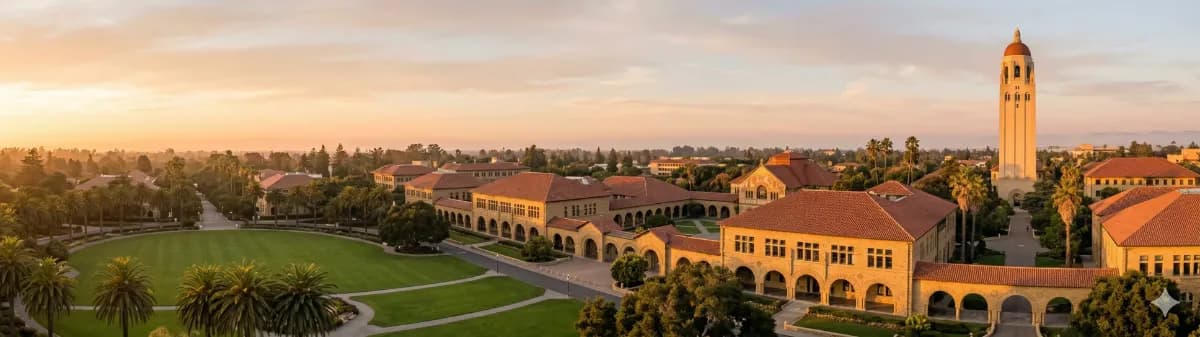
The Stanford Graduate School of Business, founded in 1925, is a graduate professional school of Stanford University, a private research university located in Stanford, California — on the San Francisco Peninsula, roughly 35 miles south of the city. Established with a founding gift from Senator Leland Stanford and his wife, the school was built on the conviction that business could be a force for social good as well as commercial success — a tension it has never stopped exploring. Today, GSB's academic philosophy is captured in its motto, Change Lives. Change Organizations. Change the World, which sounds aspirational until you look at the alumni list and realise it was written retrospectively as much as prospectively. Research at GSB spans organisational behaviour, political economics, finance, and strategy, with a persistent emphasis on how individual decisions aggregate into institutional outcomes. Accreditations and Rankings Accreditations AACSB accredited EQUIS accredited (Triple Crown status not held — AMBA accreditation is not pursued by GSB, consistent with its US peer schools) Rankings Financial Times Global MBA Ranking: #1 (2023) QS World University Rankings – Business & Management: #2 globally (2024) Bloomberg Businessweek MBA Ranking: Top 5 (2023) US News & World Report Best Business Schools: #1 (2024) Executive Education at a Glance Stanford GSB Executive Education is built around two pillars: open-enrollment programs for individuals, and custom programs designed exclusively for organisations. The school is particularly known for its flagship Stanford Executive Program (SEP), a six-week immersive experience that has been running for over seven decades and draws C-suite participants from more than 35 countries. Other signature open programs include Leading Change and Organisational Renewal (LCOR), Executive Program for Growing Companies (EPGC), and Emerging CFO, each reflecting the school's preference for cohort-based, discussion-heavy learning rather than lecture-led instruction. Program durations in the open portfolio range from three days to six weeks, with most delivered on campus in Stanford, California, though select programs include online and blended formats. Fees for open programs typically range from approximately $7,000 for shorter seminars to over $65,000 for the full SEP experience. Custom programs for corporate clients vary substantially in scope and pricing. Campus and Facilities Stanford GSB occupies the Knight Management Center, a striking complex opened in 2011 and designed by Robert A.M. Stern Architects, featuring sandstone and red-tile architecture that harmonises with the wider Stanford campus without feeling dated. Executive participants have access to dedicated seminar rooms, tiered case study classrooms, and collaboration spaces designed explicitly for peer-to-peer exchange rather than passive learning. The surrounding Stanford campus — itself one of the most architecturally cohesive university environments in the United States — adds a sense of intellectual scale, with proximity to the Stanford d.school (Hasso Plattner Institute of Design) and Stanford Engineering creating cross-disciplinary collision that few business schools can replicate. And then there is the location itself: Palo Alto and the broader Bay Area give executive participants immediate, living access to the companies, investors, and entrepreneurs who define the current global economy. Faculty and Research Stanford GSB has a faculty of approximately 140 tenure-line professors, drawn internationally but disproportionately influential given the school's size — a number of them rank among the most-cited scholars in their disciplines worldwide. Research strengths particularly relevant to executive participants include organisational behaviour and culture change, behavioural economics, corporate governance, entrepreneurial finance, and the economics of innovation. Faculty routinely bring active consulting relationships, board positions, and startup involvements into the classroom, which keeps the instruction grounded in current practice rather than archived case studies. The school is home to several significant research centres, including the Stanford Institute for Innovation in Developing Economies (SEED) and the Corporate Governance Research Initiative (CGRI), both of which feed directly into executive program curricula. Student Body, Alumni, and Career Outcomes Executive education cohorts at Stanford GSB are deliberately kept small — the school values depth of exchange over scale — with most open programs running between 30 and 90 participants, and international representation typically exceeding 50% of any cohort. The broader GSB alumni network spans more than 42,000 graduates across 100+ countries, with particularly high concentrations in technology, venture capital, private equity, consulting, and government. Alumni include a remarkable density of founder-CEOs and investors: Phil Knight (Nike), Reid Hoffman (LinkedIn), and Mary Barra (General Motors) are among the names most frequently cited, but the more striking statistic is the volume of venture-backed companies tracing a direct line to GSB graduates. For executive participants, the alumni network functions less as a job-placement mechanism and more as a durable peer community — the kind that generates board appointments and co-investment conversations years after a program ends.
Interested in this program?
No upcoming dates are listed right now. Register your interest and Stanford Graduate School of Business will let you know when the next cohort opens.
Duration
N/A
Format
online
Topic
Sustainability & ESG
Language
English
About This Program
Why Stanford Graduate School of Business?
Your Profile
- Building strategies that move the needle on sustainability efforts within their organizations or industries
- Developing and communicating the vision and value of a sustainable business future
- Striving to be on the leading edge of environmental sustainability or transitioning from a legacy business model to a more innovative approach to business
- Driving strategies at the business unit or organizational level, where maintaining a competitive advantage is critical
Benefits
- Assess climate change impacts on your organization using the carbon cycle, tipping points, and cumulative emissions frameworks.
- Identify where your business model intersects with sustainability issues and find concrete opportunities.
- Map your organization's value chain in relation to sustainability and propose short and long-term actions.
- Apply political risk tools to manage the influence of NGOs, activists, and regulators on business decisions.
- Use the triple bottom line framework to measure and communicate sustainability performance across the organization.
What You'll Learn
- Module 1: The Climate Challenge - Develop your understanding of the climate challenges at hand and key terminology, including the carbon cycle, energy buildup, tipping points, and cumulative emissions; reflect on how climate change is impacting your organization and what you can learn from your competitors; make a pitch for sustainability as part of a communication exercise.
- Module 2: Business Models and Sustainability - Understand the components of a business model using the business model architecture framework; examine Tesla's business model as part of a case study deep dive; explore where your business model intersects with sustainability issues and identify opportunities.
- Module 3: Sustainability and Your Value Chain - Learn how Little's law - a numerical theorem - is applied to understanding circular economies and their relationship to the value chain; map your organization's value chain in relation to sustainability; propose short and long-term actions that impact your organization's value chain as it relates to climate change.
- Module 4: Leading for Environmental Sustainability - Identify opportunities to lead sustainability change at any level of your organization and learn how to become an agent of change; understand how leadership can be leveraged to support and grow sustainability goals across the organization.
- Module 5: Innovation for a Sustainable Future - Explore the interdependency between innovation and accomplishing sustainability goals; understand the role of leadership in managing the risks associated with change; examine several use cases, including Toyota Prius, Boeing 787, and Tesla, using the DICE framework - a unified framework for business model innovation.
- Module 6: The Politics of Sustainability - Part 1 - Analyze the impacts of political risks from private political groups, such as nongovernmental organizations, individual activists, and the media, using Citigroup's case study as a practical example; investigate the influence of location-based political risks on business decision making through Tata Motors' case; apply practical tools to mitigate and manage political risks in various business contexts.
- Module 7: The Politics of Sustainability - Part 2 - Utilize a structured framework to systematically assess the responses of various interest groups to environmental policies; examine the intricacies of global environmental policy development and implementation and evaluate an organization's existing sustainability strategy.
- Module 8: The Triple Bottom Line - Use the triple bottom line framework to measure, evaluate, and communicate sustainability performance for your organization; analyze sustainability-related strategic performance and how it relates to your organization's value creation activities and create your action plan for sustainability.
Frequently Asked Questions
How to Apply
- 1
Check your eligibility
Review the entry requirements listed on this page. Most executive programs require 8–15 years of professional experience.
- 2
Compare programs
Use Gradia's comparison tool to evaluate up to 3 programs side-by-side on fees, duration, format, and accreditation.
Compare programs → - 3
Contact the school
Send a message directly to Stanford Graduate School of Business via Gradia to request a brochure or speak with an admissions advisor.
- 4
Prepare your application
Gather your CV, reference letters, and any required test scores. Many EMBA programs waive standardised tests for senior candidates.
- 5
Submit your application
Apply directly through Stanford Graduate School of Business's official application portal.
Apply now →
Other Sustainability & ESG programs at Stanford Graduate School of Business
1 program available