

Sustainable Aviation Management CAS

University of St. Gallen
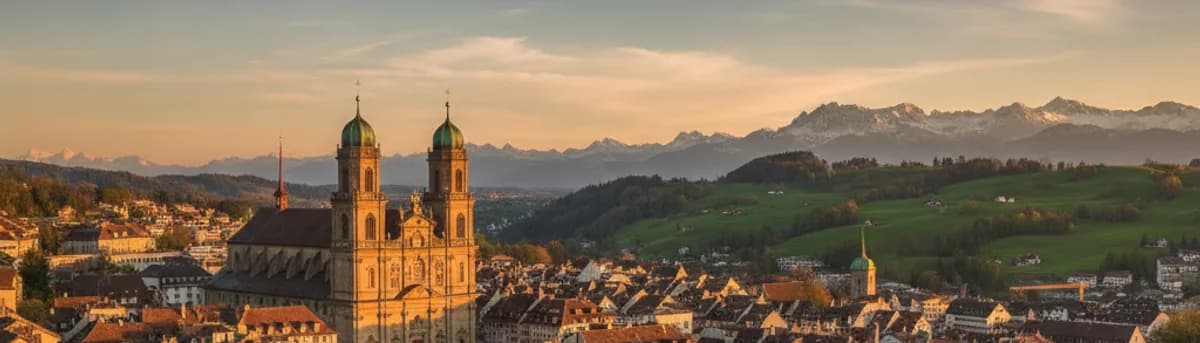
The University of St. Gallen (Universität St. Gallen, known as HSG) was founded in 1898 as the Handelsakademie St. Gallen, making it one of Switzerland's oldest business-focused universities. It is a public, canton-funded university located in St. Gallen, northeastern Switzerland, university-affiliated in the sense that it holds full university status under Swiss federal recognition while remaining a specialist institution focused on economics, law, business, and social sciences. The founding mission was practical: train people who could navigate commerce at a time when Switzerland's export economy was expanding fast. That pragmatism persists today in an academic philosophy that ties theoretical rigor directly to real-world application, and that insists on linking disciplines rather than isolating them. Accreditations and Rankings Accreditations: AACSB EQUIS AMBA HSG holds triple-crown accreditation, placing it among fewer than 1% of business schools worldwide. Rankings: Financial Times European Business School Ranking: #5 in Europe (2024) Financial Times Master in Management ranking: #1 globally for the HSG MiM program (2024) QS World University Rankings by Subject (Business & Management Studies): Top 50 globally (2024) Financial Times Executive Education Open Programs: ranked among Europe's top programs (2023) Executive Education at a Glance HSG Executive School of Management, Technology and Law (ES-HSG) is the dedicated executive education arm of the university, and it is one of Europe's larger executive education providers by program volume. The school offers over 150 open programs annually alongside a significant custom program portfolio built for corporate clients across German-speaking Europe and internationally. Topic strengths include leadership development, digital transformation, corporate governance, financial management, and the intersection of law and business, a distinctly HSG emphasis that few business schools replicate. Programs run in-person in St. Gallen and Zurich, with a growing set of online and blended formats introduced after 2020. Duration ranges from two-day intensive seminars to multi-module programs spanning several months, including the flagship General Management Program (AMP), which runs across six modules over roughly eight months. Open program fees typically range from CHF 2,500 for short seminars to CHF 25,000 or more for the longer management programs. Campus and Facilities The main HSG campus sits on a hillside above St. Gallen, a mid-sized Swiss city about 75 kilometers east of Zurich near the Austrian and Liechtenstein borders. The campus architecture is notable: the main building, completed in 1963 and designed by Walter Förderer, is a listed modernist structure whose concrete interior is hung with a permanent art collection that includes works by Alberto Giacometti, Le Corbusier, and Fritz Hundertwasser. Executive participants use the Weiterbildungszentrum Holzweid, a dedicated executive education facility in a quieter park setting a short distance from the main campus, which provides seminar rooms, residential accommodation, and dining. St. Gallen itself is a UNESCO World Heritage city because of its Baroque cathedral library, and proximity to Zurich's financial center, the Rhine Valley's industrial base, and the Swiss German Mittelstand makes the location relevant for any executive working in or with European corporate structures. Faculty and Research HSG has roughly 100 full professors and a larger body of assistant professors, lecturers, and research associates, with faculty drawn from across Europe, North America, and beyond. Research strengths directly relevant to executive education include strategic management, family business (the Center for Family Business, CFB-HSG, is one of Europe's leading research centers in this area), public governance, behavioral economics, and digital business models. Faculty at ES-HSG are expected to bring current research into the classroom, and many also work as board members, consultants, or advisors to Swiss and European firms, which shortens the distance between what is published and what is taught. The Research Institute for International Management and the Institute of Behavioral Science and Technology are among the more active centers feeding into program content. Student Body, Alumni, and Career Outcomes Executive education cohorts at HSG are internationally mixed, though the core participant base reflects the school's geography: senior managers and executives from Swiss, German, Austrian, and broader European firms, with particular concentration in financial services, manufacturing, pharmaceuticals, and professional services. The broader HSG alumni network numbers over 30,000 across more than 100 countries, with strong clusters in Zurich's banking sector, German industrial companies, and Swiss multinationals including Nestlé, Novartis, and ABB. HSG does not publish systematic placement or salary-uplift data for its executive education participants, which is consistent with how most European executive schools handle short-program outcomes. The alumni association (HSG Alumni) is active and organizes regular events in major European cities, which gives executive participants a structured way to stay connected after completing a program.
Interested in this program?
No upcoming dates are listed right now. Register your interest and University of St. Gallen will let you know when the next cohort opens.
Duration
N/A
Format
N/A
Topic
Sustainability & ESG
Language
English
About This Program
Why University of St. Gallen?
Your Profile
- Executives and accountable managers in the civil aviation industry with at least 3 years of working experience.
- Key Account and Corporate Development Managers affiliated with airlines, airports, ground handling, or supply chain.
- CSR, HR, and Risk Managers in aviation organizations seeking to build an environmental sustainability strategy.
- Project managers, controllers, and safety managers responsible for compliance and environmental performance.
- Cockpit and cabin crew transitioning into corporate roles within aviation organizations.
- Regulators and aviation authority personnel with responsibility for environmental standards.
Benefits
- Develop a relevant, comprehensive and dynamic environmental sustainability strategy.
- Explain the value-based implications of everyday behaviors and decisions for an organization's culture.
- Develop thoughtful, responsible proposals and solutions in the context of business and society.
- Analyze the benefits of Sustainable Aviation Fuels (SAF) for aviation and their environmental impacts.
- Develop robust plans to address the most significant environmental aspects.
What You'll Learn
- Module 1: Sustainability Strategies (2.5 days) - Framework to identify short, medium, and long-term environmental measures; carbon and water footprints, energy, regulatory requirements, alternative fuels, policy and reporting, stakeholder engagement, environmental management systems, partnerships and more.
- Module 2: Environment Management Systems in Aviation (1 day) - Design and implement aviation-specific Environmental Management Systems (EMS) for airlines, ground handlers, airline caterers and MROs; track compliance obligations across aviation organizations and business models.
- Module 3: International Responsible Leadership (4 days) - Practical challenges employees and managers face in professional life; hands-on case studies, interactive class discussions, and insights from management, psychology and ethics.
- Module 4: Sustainable Aviation Fuels (SAF) (2 days) - Implications of each SAF adoption method; CORSIA compliance options including eligible carbon offsets, sustainable aviation fuel, and low-carbon aviation fuel meeting ICAO sustainability criteria.
- Module 5: Sustainable Risk and Safety Module (2.5 days) - Corporate social responsibility, organizational ethics, responsible decision making to avoid ethical blindness; regulatory context that shapes responsible corporate conduct.
- Module 6: Carbon Markets and Aviation (2 days) - Evolution of CORSIA at ICAO; compliance and voluntary carbon markets; approved SAF standards; airlines' and IATA's experience with SAF standards and off-take agreements.
How to Apply
- 1
Check your eligibility
Review the entry requirements listed on this page. Most executive programs require 8–15 years of professional experience.
- 2
Compare programs
Use Gradia's comparison tool to evaluate up to 3 programs side-by-side on fees, duration, format, and accreditation.
Compare programs → - 3
Contact the school
Send a message directly to University of St. Gallen via Gradia to request a brochure or speak with an admissions advisor.
- 4
Prepare your application
Gather your CV, reference letters, and any required test scores. Many EMBA programs waive standardised tests for senior candidates.
- 5
Submit your application
Apply directly through University of St. Gallen's official application portal.
Other Sustainability & ESG programs at University of St. Gallen
1 / 55 programs available