
Negotiation Dynamics

INSEAD
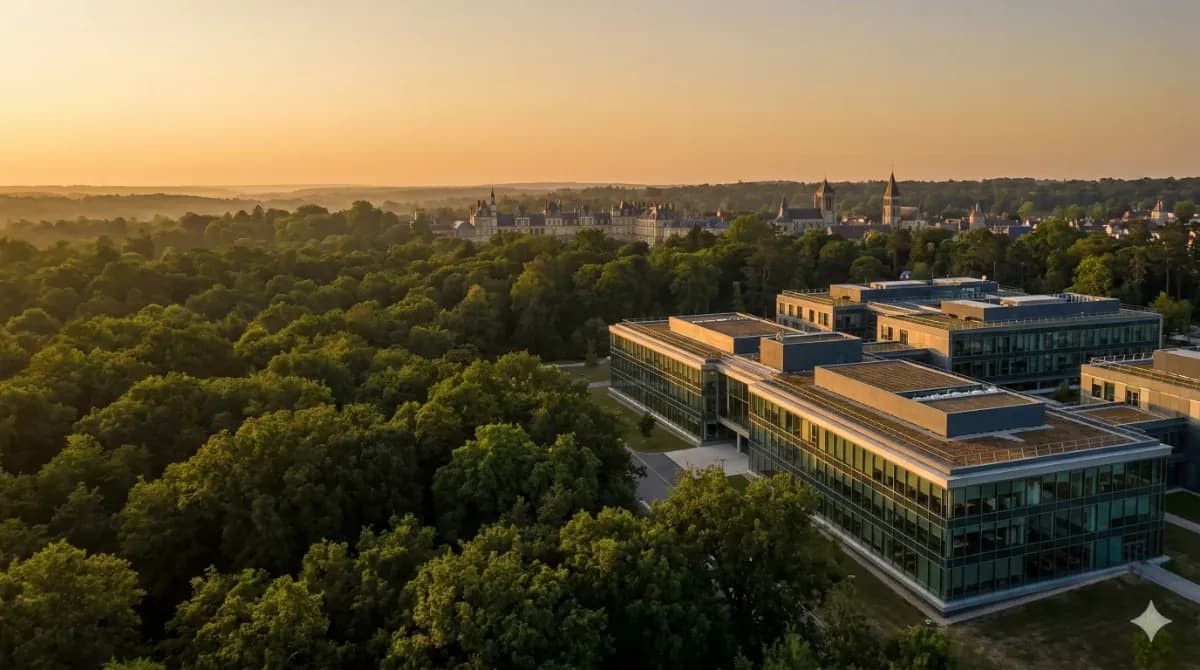
INSEAD — Institut Européen d'Administration des Affaires — was founded in 1957 in Fontainebleau, France, by Georges Doriot and a group of European business leaders who believed the continent needed a genuinely international school of management, not a replica of American models. It operates as an independent, private, non-profit institution with no university affiliation, which gives it an unusual degree of curricular agility. Today INSEAD has campuses in Fontainebleau, Singapore, and Abu Dhabi, plus a hub in San Francisco, and its academic philosophy remains rooted in cross-cultural management, diversity of thought, and the tension between local context and global strategy. The school's MBA program consistently ranks among the world's fastest to complete — one year — which reflects a broader institutional bias toward intensity and focus over convention. Accreditations and Rankings Accreditations AACSB (accredited since 1997) EQUIS (accredited since 1997) AMBA Triple Crown accredited Rankings Financial Times Global MBA Ranking: #1 (2024) Financial Times Executive Education Open Programmes: Top 5 globally (2024) Financial Times Executive Education Custom Programmes: Top 5 globally (2024) QS World University Rankings — Business & Management: Top 5 globally (2024) Bloomberg Businessweek MBA Ranking: Top 10 globally (2023) Executive Education at a Glance INSEAD Executive Education is one of the largest and most internationally active operations of its kind, delivering programs to over 10,000 executives per year across its campus network. The portfolio spans more than 80 open-enrollment programs and a substantial custom program division that designs bespoke interventions for global corporations — clients have included multinationals across financial services, energy, pharmaceuticals, and technology. Signature open programs include the Advanced Management Programme (AMP), one of the most selective senior leadership programs in the world, typically drawing participants with 15 or more years of experience; the Transition to Business Leadership program; and a growing suite of programmes in family business, healthcare management, and negotiation. Formats range from intensive residential modules of three to five days to multi-module programs spanning several months, with select online and blended formats added in recent years. Fees for open programs typically range from approximately €3,500 for shorter focused programs to over €30,000 for flagship multi-week residential offerings, and the school offers a limited number of scholarships and financial assistance options for qualifying participants. Campus and Facilities The Fontainebleau campus sits at the edge of the Forest of Fontainebleau, 60 kilometres south of Paris, in a setting that manages to feel both removed from distraction and effortlessly connected — Paris is 35 minutes by train, and the TGV links mean participants arrive from across Europe the morning a program begins. The campus itself is purpose-built for residential executive learning, with tiered amphitheatre-style classrooms, syndicate rooms, a dedicated Executive Education centre, and accommodation that keeps cohorts together in the evenings as much as in the sessions. The Singapore campus, opened in 2000, mirrors much of this infrastructure and adds direct immersion in Asia's business environment — something that matters considerably when a program's content concerns emerging markets, supply chain, or Asia-Pacific strategy. Abu Dhabi, the newest campus, provides access to the Gulf's increasingly significant business ecosystem and is particularly relevant to programs touching on family enterprise, sovereign wealth, or energy transition. Faculty and Research INSEAD's faculty numbers around 165 full-time professors drawn from more than 40 countries, and the school makes a point of requiring faculty to be capable of teaching across cultural contexts rather than from within a single national tradition. Research strengths that bear directly on executive education include organisational behaviour, negotiation and conflict resolution, entrepreneurship and family enterprise, strategy, and leadership — the latter anchored in part by the Coaching and Consulting Centre and the Global Leadership Centre, which has produced widely used psychodynamic approaches to leadership development. The INSEAD Hoffmann Global Institute for Business and Society reflects a growing institutional commitment to research on sustainability, stakeholder governance, and the social responsibilities of business — areas increasingly central to what senior executives are asking about. Several faculty members are among the most cited in their fields globally, and the school's case-writing output rivals Harvard Business School in volume and geographic diversity. Student Body, Alumni, and Career Outcomes INSEAD's executive education cohorts are among the most internationally diverse of any business school, with participants drawn from over 130 nationalities across its programs in a typical year — a figure that is not accidental but the product of deliberate admissions design. The broader INSEAD alumni network encompasses more than 67,000 graduates across 175 countries, concentrated in senior roles across financial services, consulting, technology, consumer goods, and private equity, with particular density in Europe and Southeast Asia. Alumni include the former CEOs of L'Oréal, Schneider Electric, and Nestlé, as well as founders of significant venture-backed companies and senior figures in international institutions. For executive education participants specifically, the network effect is often cited as one of the primary reasons for choosing INSEAD over geographically closer alternatives — the peer cohort itself is, in many cases, as valuable as the curriculum.
Available Cohorts
Choose your preferred start date
All-inclusive program fee
Duration
3 days
Format
in-person
Topic
Negotiations
Language
English
About This Program
Why INSEAD?
Your Profile
- Executives involved in mergers, acquisitions or joint-venture negotiations
- Managers handling procurement
- Human resource managers
- Managers in liaison roles such as national account managers
- Key account managers
- Barristers and other lawyers.
Benefits
- Increase your efficiency, build better relationships with fewer conflicts, drive more engagement and gain more confidence.
- Be equipped with the necessary knowledge to navigate any negotiation, from preparing and debriefing a negotiation, to situational awareness that will allow you to understand the best negotiation moves to take at any given moment, understanding what happen...
- Read More
- Acquire hands-on practice enabling you to strengthen weak points and preparing you to return to work.
- Develop a sustainable and situational approach for maximising value and minimising risk and resistance in your negotiation.
- Acquire new tools, change your behaviour and develop a new mindset.
- Post-programme 1-on-1 coaching sessions that encourage a continuous, lifelong learning journey that will help you influence thoughts, feelings, perceptions and behaviours.
What You'll Learn
- Understand the process no matter the environment
- Strategy and implementation: learn to think and do
- There is no single ‘right’ way to negotiate - Every person has strengths and weaknesses, particularities and preferences that are different and unique. Avoid delivering a generic approach that would surely fall short of expectations and instead invest in a delivery that is highly customisable for each individual. Learn from the experiences of others, experiment with new ideas in a safe environment, become aware of what you do well to develop new skills to complement those you already possess. Coaching can be a transformational experience, complementing in-class learning. When paired with training, coaching has been shown to significantly help change behaviour in 85% of cases. Unique to INSEAD, our post-programme coaching takes the form of a two-hour virtual workshop that can be used within one month of completing the programme. Run by experienced coaches, you will get: If you have any questions related to our or procedures, we are here to help you., Further support once you have left INSEAD to ensure you are applying the and theory learnt on the programme, Further help with increasing your productivity once back at work
Frequently Asked Questions
How to Apply
- 1
Check your eligibility
Review the entry requirements listed on this page. Most executive programs require 8–15 years of professional experience.
- 2
Compare programs
Use Gradia's comparison tool to evaluate up to 3 programs side-by-side on fees, duration, format, and accreditation.
Compare programs → - 3
Contact the school
Send a message directly to INSEAD via Gradia to request a brochure or speak with an admissions advisor.
- 4
Prepare your application
Gather your CV, reference letters, and any required test scores. Many EMBA programs waive standardised tests for senior candidates.
- 5
Other Negotiations programs at INSEAD
1 / 33 programs available