
Stockholm School of Economics
Why SSE?
Stockholm School of Economics has produced more Scandinavian CEOs, central bankers, and Nobel Prize-winning economists per capita than any comparable institution in Northern Europe. Executive participants learn in a small, research-driven school, taught by faculty who publish alongside some of the world's leading economists.
About Stockholm School of Economics
Stockholm School of Economics (Handelshögskolan i Stockholm, commonly known as SSE) was founded in 1909 by the Swedish business community as a privately funded institution, and it has stayed private ever since, which makes it one of the few independent business schools in Europe. Located in the Vasastan district of Stockholm, Sweden, SSE is a focused, standalone business school with approximately 2,000 students; it chooses depth and selectivity over the scale of a comprehensive university. Its founding mission was to serve Swedish industry with rigorous economic and business education, and today that mission extends to a broader Nordic and global role, built on the view that strong academic research and real business relevance reinforce each other. The school stays rooted in economics as its foundational discipline, which gives SSE graduates and executive participants a more analytical lens than peers from generalist management schools.
Accreditations and Rankings
Accreditations:
- AACSB accredited
- EQUIS accredited
- AMBA accredited
- Triple Crown status (held by fewer than 1% of business schools worldwide)
Rankings:
- Financial Times European Business Schools Ranking: ranked among the top 30 European business schools (2023)
- Financial Times Masters in Management Ranking: SSE's MSc in Business & Economics ranked in the global top 10 (2023)
- Financial Times Executive Education, Custom Programmes: ranked among Europe's top providers (2023)
- QS World University Rankings, Business & Management Studies: top 100 globally (2024)
Executive Education at a Glance
SSE Executive Education, a wholly owned subsidiary of the school, is one of the largest executive education providers in the Nordic region. It runs over 100 open and custom programs a year and works with roughly 10,000 participants. The unit has a strong reputation in leadership development, strategy, finance, and sustainability, and its sustainability programs reflect Stockholm's standing in ESG thinking and policy. Open programs range from short two-to-three-day intensives to longer modular formats spread across several weeks, and fees for open programs typically run from SEK 20,000 to SEK 80,000 (approximately €1,700 to €7,000) depending on length and topic. Flagship open programs include the General Management Program, aimed at senior managers preparing for broader P&L responsibility, and a suite of finance programs that draw on SSE's economics faculty. Custom programs account for a significant share of revenue, and SSE Executive Education has longstanding corporate relationships with major Nordic and multinational employers including Volvo, Ericsson, and SEB. Programs are delivered predominantly in person at SSE's Stockholm facilities, with blended options available and a growing portfolio of online-accessible modules.
Campus and Facilities
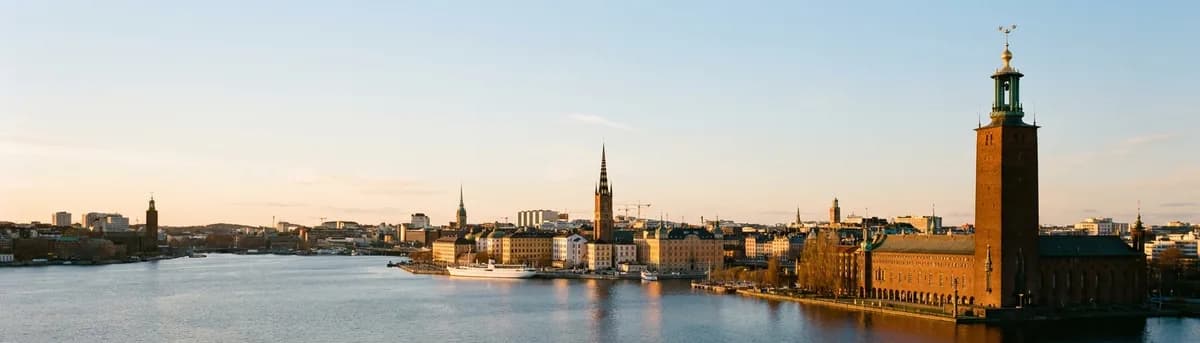
SSE's main building on Sveavägen is an early twentieth-century structure that has housed the school in central Stockholm for over a century, and executive participants meet in rooms where Swedish business history was made. The campus is small by design: executive cohorts use the same spaces, libraries, and restaurants as degree students and faculty, which keeps them inside the academic community rather than in a separate corporate training centre. Stockholm adds to this. As the home of the Riksbank (the world's oldest central bank), a large fintech and startup sector, and Scandinavia's highest concentration of listed companies, the city lets participants study open-economy capitalism, sustainability policy, and technology-driven business at first hand. For executives working on strategy or innovation, the option to arrange company visits and expert sessions in Stockholm is a practical advantage that few European business school locations can match.
Faculty and Research
SSE's full-time faculty numbers around 180, drawn mostly from leading PhD programs in Europe and North America, and for its size the school keeps a high ratio of research-active faculty to students. The Department of Economics has produced three Nobel Laureates in Economic Sciences: Gunnar Myrdal (1974), Bertil Ohlin (1977), and Lars Peter Hansen (who completed doctoral work there). That depth shapes the teaching executive participants encounter. Research strengths with direct executive relevance include financial economics, corporate governance, entrepreneurship, and the economics of sustainability and climate policy, and the Mistra Center for Sustainable Markets (Misum) at SSE is a leading European research centre on sustainable business. Faculty who teach in executive programs are active researchers: SSE avoids keeping a separate pool of teaching-only practitioners for executive courses, so the person leading your finance module is usually publishing in that field.
Student Body, Alumni, and Career Outcomes
SSE's alumni network numbers approximately 35,000 graduates worldwide. Given the school's size and age, its per-capita weight in Scandinavian business and public life is high: at any given time, a large share of Sweden's biggest company CEOs, CFOs, and board members hold SSE degrees. Executive education cohorts are usually smaller and more senior than at larger institutions, with open program groups of typically 20 to 40 participants, which makes peer learning and network-building more direct. Participants come mainly from Nordic-headquartered multinationals, financial institutions, and the public sector, though the school's international profile also draws participants from across Europe and beyond, especially for its flagship general management and leadership programs. For senior professionals working in or with the Nordic markets, which are among the world's most open and digitally advanced economies, the SSE alumni connection is a lasting practical asset.
Accreditations
EFMD Quality Improvement System
Rankings
Frequently Asked Questions
Available Programs
1 / 1919 programs available
Accreditations
EFMD Quality Improvement System