

Management Acceleration Programme

INSEAD
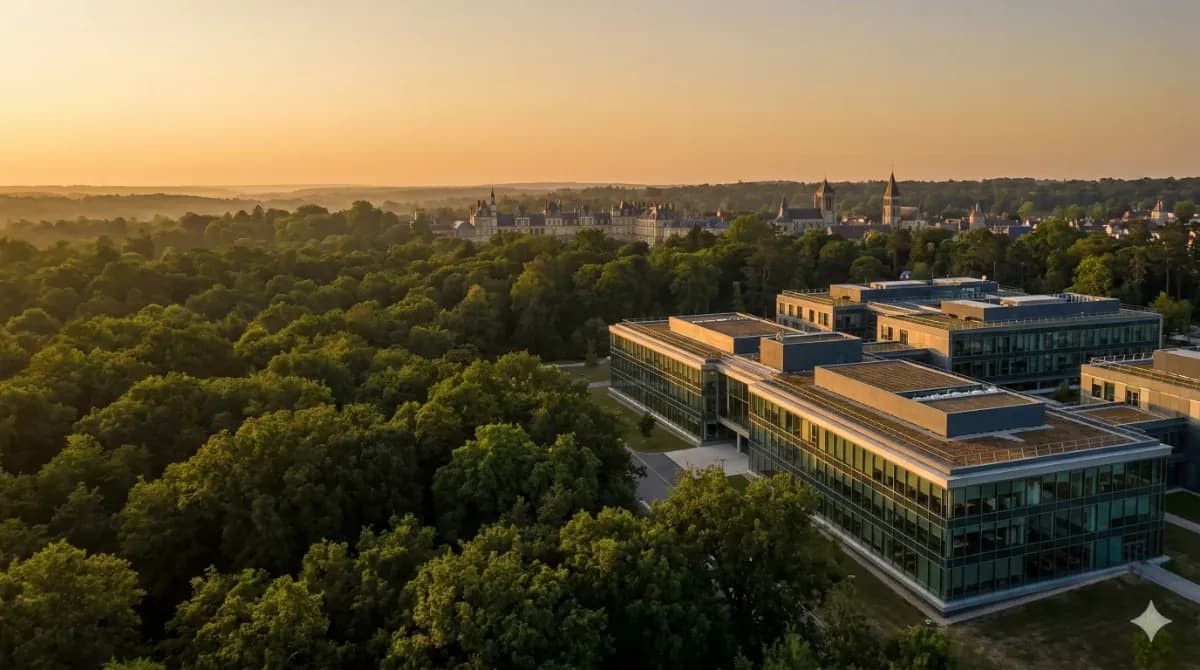
INSEAD — Institut Européen d'Administration des Affaires — was founded in 1957 in Fontainebleau, France, by Georges Doriot and a group of European business leaders who believed the continent needed a genuinely international school of management, not a replica of American models. It operates as an independent, private, non-profit institution with no university affiliation, which gives it an unusual degree of curricular agility. Today INSEAD has campuses in Fontainebleau, Singapore, and Abu Dhabi, plus a hub in San Francisco, and its academic philosophy remains rooted in cross-cultural management, diversity of thought, and the tension between local context and global strategy. The school's MBA program consistently ranks among the world's fastest to complete — one year — which reflects a broader institutional bias toward intensity and focus over convention. Accreditations and Rankings Accreditations AACSB (accredited since 1997) EQUIS (accredited since 1997) AMBA Triple Crown accredited Rankings Financial Times Global MBA Ranking: #1 (2024) Financial Times Executive Education Open Programmes: Top 5 globally (2024) Financial Times Executive Education Custom Programmes: Top 5 globally (2024) QS World University Rankings — Business & Management: Top 5 globally (2024) Bloomberg Businessweek MBA Ranking: Top 10 globally (2023) Executive Education at a Glance INSEAD Executive Education is one of the largest and most internationally active operations of its kind, delivering programs to over 10,000 executives per year across its campus network. The portfolio spans more than 80 open-enrollment programs and a substantial custom program division that designs bespoke interventions for global corporations — clients have included multinationals across financial services, energy, pharmaceuticals, and technology. Signature open programs include the Advanced Management Programme (AMP), one of the most selective senior leadership programs in the world, typically drawing participants with 15 or more years of experience; the Transition to Business Leadership program; and a growing suite of programmes in family business, healthcare management, and negotiation. Formats range from intensive residential modules of three to five days to multi-module programs spanning several months, with select online and blended formats added in recent years. Fees for open programs typically range from approximately €3,500 for shorter focused programs to over €30,000 for flagship multi-week residential offerings, and the school offers a limited number of scholarships and financial assistance options for qualifying participants. Campus and Facilities The Fontainebleau campus sits at the edge of the Forest of Fontainebleau, 60 kilometres south of Paris, in a setting that manages to feel both removed from distraction and effortlessly connected — Paris is 35 minutes by train, and the TGV links mean participants arrive from across Europe the morning a program begins. The campus itself is purpose-built for residential executive learning, with tiered amphitheatre-style classrooms, syndicate rooms, a dedicated Executive Education centre, and accommodation that keeps cohorts together in the evenings as much as in the sessions. The Singapore campus, opened in 2000, mirrors much of this infrastructure and adds direct immersion in Asia's business environment — something that matters considerably when a program's content concerns emerging markets, supply chain, or Asia-Pacific strategy. Abu Dhabi, the newest campus, provides access to the Gulf's increasingly significant business ecosystem and is particularly relevant to programs touching on family enterprise, sovereign wealth, or energy transition. Faculty and Research INSEAD's faculty numbers around 165 full-time professors drawn from more than 40 countries, and the school makes a point of requiring faculty to be capable of teaching across cultural contexts rather than from within a single national tradition. Research strengths that bear directly on executive education include organisational behaviour, negotiation and conflict resolution, entrepreneurship and family enterprise, strategy, and leadership — the latter anchored in part by the Coaching and Consulting Centre and the Global Leadership Centre, which has produced widely used psychodynamic approaches to leadership development. The INSEAD Hoffmann Global Institute for Business and Society reflects a growing institutional commitment to research on sustainability, stakeholder governance, and the social responsibilities of business — areas increasingly central to what senior executives are asking about. Several faculty members are among the most cited in their fields globally, and the school's case-writing output rivals Harvard Business School in volume and geographic diversity. Student Body, Alumni, and Career Outcomes INSEAD's executive education cohorts are among the most internationally diverse of any business school, with participants drawn from over 130 nationalities across its programs in a typical year — a figure that is not accidental but the product of deliberate admissions design. The broader INSEAD alumni network encompasses more than 67,000 graduates across 175 countries, concentrated in senior roles across financial services, consulting, technology, consumer goods, and private equity, with particular density in Europe and Southeast Asia. Alumni include the former CEOs of L'Oréal, Schneider Electric, and Nestlé, as well as founders of significant venture-backed companies and senior figures in international institutions. For executive education participants specifically, the network effect is often cited as one of the primary reasons for choosing INSEAD over geographically closer alternatives — the peer cohort itself is, in many cases, as valuable as the curriculum.
Interested in this program?
No upcoming dates are listed right now. Register your interest and INSEAD will let you know when the next cohort opens.
Duration
5 days
Format
in-person
Topic
Leadership
Language
English
About This Program
Why INSEAD?
Your Profile
- Individual contributors who aspire to gain – or have recently gained – management responsibilities
- Functional experts whose success depends on understanding the business as a whole, effective cross-functional interactions and the ability to influence without formal authority
- People with potential for future senior management roles
- Typically graduates with between five and twelve years of work experience.
Benefits
- Enhance leadership competence as a manager.
- Enhance your ability to lead mindfully, effectively and responsibly with or without formal authority.
- Stay more focused on creating value and grounded in long-term purpose.
- Join a community of international high-potentials that will support you long after the programme is over.
- Develop clear aims and plans for your ongoing personal and professional development. Focus on key management training topics.
- Financial Acumen
- Strategic Thinking and Execution
- Marketing Strategy
- Resilience and Agility
- Self-awareness
- Building Inclusivity
- Communication
- Leading Teams
- Change Management
What You'll Learn
- Leadership foundations - Examine how, why, and on whose behalf you lead in your work. Acquire the skills to lead and work within diverse teams and across functions and cultures. Topics covered include:, Developing your own and others' leadership talent, Giving and receiving effective feedback, Understanding, motivating and communicating within teams, Exercising influence without formal authority, Harnessing organisational culture and managing across cultures, Leading organisational change.
- Strategic insight - Grasp the essence of strategic analysis, including how to compete as a single company within a single industry and how to build and manage a portfolio of businesses. Topics covered include:, Analysis by industry, market and competition, Developing and sustaining competitive advantage, Changing the rules of the game – Blue Ocean Strategy, Strategic resources and alliances, Corporate expansion, mergers and acquisitions.
- Business expertise - Embark on a learning journey through all parts of a business that create, capture and deliver value. Gain a broad perspective on business and of each fundamental area. Topics covered include: Learning Methodology The Management Acceleration Programme includes a variety of learning methodologies: interview Access to learning platform Simulations and experiential learning Individual, group and peer coaching Join a community of INSEAD alumni Access to an online platform and to aid with networking and continuous learning 2 optional follow-up coaching sessions Optional follow-up coaching for learning enhancement Just as the programme preparation is designed to maximise participants’ learning while on campus, so our follow-up virtual coaching sessions are designed to maximise participants’ ongoing learning and development in the months following their return to the workplace – thereby leveraging their own and their organisation's investment in the programme. Included in the programme fee are two optional follow-up coaching sessions. We also offer an additional five virtual follow-up sessions, not included in the tuition fee. The sessions each last one hour and are conducted over the telephone and or internet telecoms. They are entirely confidential. To be eligible, participants must have attended the programme in the past 12 months. If you have any questions related to our or procedures, we are here to help you., The key types of financial statements and their use for strategic decision-making, Management accounting systems and the tools to identify relevant information, Making structured marketing decisions in situations that initially seem totally unstructured, The challenges to value creation in a supply network and co-ordinating initiatives for value capture., Interactive lectures to grasp the latest thinking and foundational concepts, Case discussions based on real-life business dilemmas, Work in diverse teams that provide perspectives different than your own, Experiential activities to practise and examine your leadership in conditions of uncertainty, Feedback from our members, classmates and colleagues at work through a 360° instrument, Group consulting and personal coaching to assist your learning, reflection and future planning, Simulations to integrate your knowledge and skills in a competitive yet low-risk environment, Pre-programme, During the programme, Post-programme
Frequently Asked Questions
How to Apply
- 1
Check your eligibility
Review the entry requirements listed on this page. Most executive programs require 8–15 years of professional experience.
- 2
Compare programs
Use Gradia's comparison tool to evaluate up to 3 programs side-by-side on fees, duration, format, and accreditation.
Compare programs → - 3
Contact the school
Send a message directly to INSEAD via Gradia to request a brochure or speak with an admissions advisor.
- 4
Prepare your application
Gather your CV, reference letters, and any required test scores. Many EMBA programs waive standardised tests for senior candidates.
- 5
Other Leadership programs at INSEAD
1 / 2828 programs available